

Email: contact@karenabeaumont.com Telephone: 01606 75586 or 07951 912 712
This site is copyright of
Karen A Beaumont
All rights reserved 2011 ©



Incredibly, since man was first able to forge a shoe, we have seen little improvement in its design and no scientific evidence to support the custom of keeping a horse shod, when shoeing isn’t necessarily the better option.
An alternative to traditional farrier practice can be found in Applied Equine Podiatry. This treatment more closely resembles a healing art, and has been based on much scientific research on the anatomy and function of the equine foot. AEP considers each structure within the hoof, the role played, how it influences its counterpart structures and how best it should be treated in order to maintain equilibrium of function. The intention behind this theory is to promote proper growth, returning correct function in order to achieve peak performance.
There are a number of important principles in Applied Equine Podiatry, namely: Always follow the paradigm
´do no harm`, never invade living tissue, work towards returning proper structure and function to the hoof. And finally, angles as absolutes should be avoided.
It is now widely accepted, AEP can support the owner in their desire to achieve the best foot possible for their horse within the realms of breed, conformation, exercise, and environment. This is achieved by choosing the right combination of environmental stimuli, along with the acceptance a horse has an innate ability to heal itself.
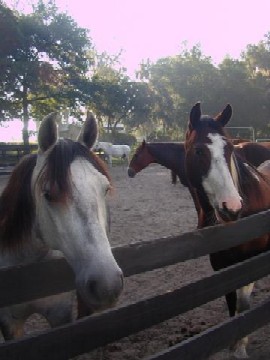
Working with these beautiful horses
in Ocala, Florida and realising my ambition
to become a qualified DAEP